Under the strong leadership of the Party Committee and the careful guidance of the Youth League Committee of the School of Cyberspace Security, Northwestern Polytechnical University, the Student Union carries out various work independently in accordance with national laws and regulations, school rules and systems, and the college charter. Adhering to the fundamental purpose of "serving students wholeheartedly", the Student Union has given full play to the role of a bridge between the college's Party and government departments and the majority of students, serving students, tempering the organization, and promoting growth. The Student Union of the School of Cyberspace Security currently consists of six functional departments: the Office, the Publicity Center, the Culture and Sports Center, the Organization and Development Department, the Student Rights and Interests Service Center, and the Learning and Practice Department. Based on their respective responsibilities, each department organizes a variety of colorful and diverse activities to enrich students' extracurricular life, broaden their horizons, deepen their understanding of their majors, provide curriculum learning support, help them achieve all-round development, and effectively assist students in better adapting to college life and integrating into the campus environment.
I. Department Composition of the Student Union of the School of Cyberspace Security
All functional departments of the Student Union of the School of Cyberspace Security have clear divisions of labor and cooperate with each other, pooling efforts to promote the development of the college's student work. They always unite as one and are committed to building an efficient, warm, and service-oriented student organization.
1. Presidium: As the core decision-making body of the Student Union, it is mainly responsible for consulting on formulating, deliberating, and adopting various rules and regulations, management methods, and major affairs arrangements of the college Student Union, coordinating the overall situation, supervising the implementation, and ensuring the efficient operation of all work. Members of the 6th Presidium are Wang Herong, Ma Junru, and Tang Zihao.
2. Office: As the central management department of the Student Union, it is mainly responsible for coordinating the work records, task assignments, and working hour statistics of various departments, as well as undertaking the financial reporting and administrative support work of the college Student Union. It is an important logistical pillar to ensure the orderly operation of the Student Union. Members of the Office include Yi Dingqi, Xu Xinyue, Fu Yuxuan, Pan Xingyu, and He Ziyi.
3. Culture and Sports Center: As the main force of the Student Union in carrying out cultural and sports activities, it adheres to the concept of "equal emphasis on culture and sports". It not only carefully plans and organizes various sports events, interest training, and other sports activities to stimulate students' enthusiasm for sports but also fully undertakes educational cultural activities such as gala evenings, art exhibitions, and cultural lectures, building a platform for students to show their personal styles. Through a variety of cultural and sports activities, the Culture and Sports Center continuously enriches the campus cultural life and promotes the prosperity and development of campus culture. Members of the Culture and Sports Center include Wen Linlin, Mao Cai'ai, Zhang Renzhe, Fan Yixin, Si Kaihao, and Chen Tianlin.
4. Organization and Development Department: It undertakes the overall organization and on-site management of large-scale college activities, mainly responsible for activity planning, off-site publicity, personnel arrangement, and daily management within the organization. Members of the Organization and Development Department include Yang Chengrui, Peng Xiaohu, Wang Canjie, Liu Yixi, Sun Boshu, Zhou Jiaqi, and Li Lin.
5. Student Rights and Interests Service Center: It is the department of the Student Union that is closest to students' lives and directly responds to students' concerns. The center focuses on collecting and solving various problems encountered by students in their daily study and life, and also actively participates in and organizes student volunteer service activities, assisting the student organizations at all levels of the university and college to carry out their work. With the core goal of "conveying demands, responding to concerns, and serving students", it is committed to building a trusted "intimate housekeeper" for students. Members of the Student Rights and Interests Service Center are Zhu Boyi, Xiao Yejian, Lin Ning, Niu Xinyi, and Li Qiugang.
6. Publicity Center: As a window for the college's image communication, it is divided into the New Media Department and the Visual Arts Department. The New Media Department is mainly responsible for the content operation of the college's WeChat official account, tweet writing and typesetting, campus news collection and editing, activity photography, and release of important notices, serving as an important hub for information transmission. The Visual Arts Department is responsible for graphic design and visual communication, including event posters, cover design, publicity truss production, and visual style maintenance of media platforms, committed to telling the college's stories through artistic language. Members of the Publicity Center include Chen Wenxuan, Fan Xiyan, Li Yuyang, Li Cong, Li Xinjing, Zhuenci, Xue Peiyuan, Fu Zewei, Zhang Jieming, Zhang Enwei, Zhang Zejun, Li Peiyi, He Sicheng, Zhang Dawei, Zhao Yuanyuan, and Zhao Zishi.
7. Learning and Practice Department: As an important force in the Student Union to guide the study style and promote the academic atmosphere, it is mainly responsible for planning and organizing various learning-oriented activities and academic lectures to create a good learning atmosphere. At the same time, it coordinates and manages the social practice related affairs of the college, actively guiding students to go out of the classroom, engage in society, and gain knowledge and improve abilities in practice. Members of the Learning and Practice Department include Liu Jiayi, Chen Zhongliang, Liu Fangchen, Zhu Yebin, and Ren Yi.
II. Featured Activities of the Student Union of the School of Cyberspace Security
Adhering to the student-centered development concept, the Student Union has carried out a series of distinctive, diverse, and connotative brand activities around ideological guidance, rights and interests services, ability training, and cultural inheritance, which not only reflect the professional characteristics of cyberspace security but also respond to the actual needs of students.
1. Strengthen Ideological Guidance and Improve Political Standing
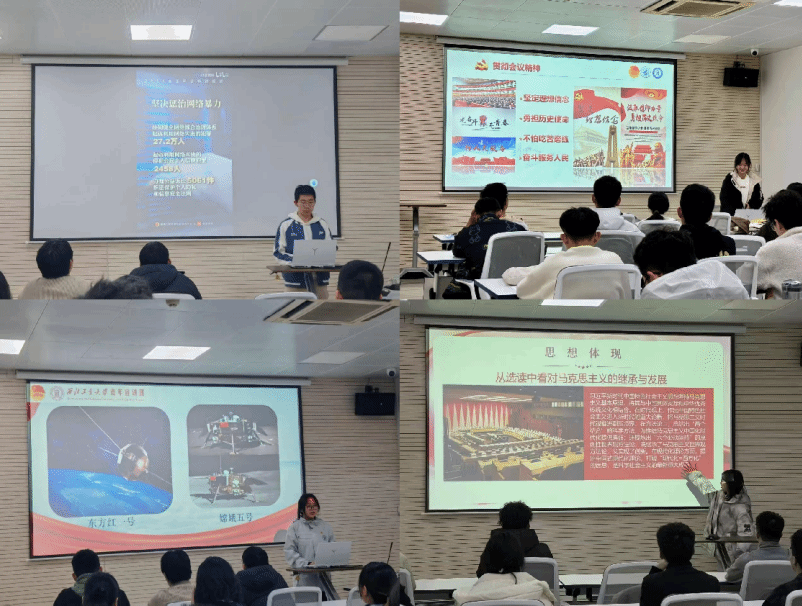
The Student Union always adheres to the guidance of Xi Jinping Thought on Socialism with Chinese Characteristics for a New Era, unswervingly implements the Party's educational policy, and continuously strengthens ideological and political guidance. During the convening of the 2025 National Two Sessions, the Student Union responded to the call immediately, organized special study sessions, led all members to conduct in-depth study of the spirit of the Two Sessions, guided the majority of students to enhance their "Four Consciousnesses", strengthen their "Four Matters of Confidence", and uphold the "Two Upholds", constantly consolidating the foundation of ideals and beliefs, cultivating family and country feelings, and fostering a sense of responsibility.
2. Listen to Students' Appeals and Adhere to the Service Purpose
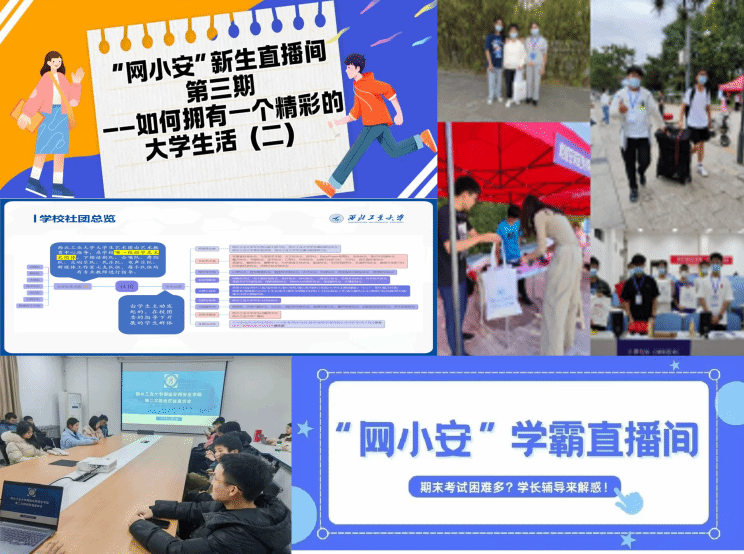
The Student Union adheres to the core mission of serving students, smoothing communication channels and responding to practical concerns. By establishing online and offline "two-way" rights and interests feedback platforms, it promptly listens to and properly solves various problems encountered by students in study and life. During the 2024 summer vacation, in response to the common "admission anxiety" and "information blind spots" of new students, the Student Union quickly organized online Q&A meetings, providing patient explanations on course selection skills, common sense of life, and club introductions to help new students adapt to the university rhythm in advance. At the same time, the Student Union compiled the "New Student Handbook", which comprehensively covers information such as registration procedures, dormitory allocation, and campus navigation, truly being meticulous and thoughtful. During the orientation period, the Student Union arranged volunteers to receive new students "one-on-one", carefully prepared orientation gift packages, led students to familiarize themselves with the campus environment, and created a warm atmosphere.
During the exam season, aiming at the difficult general education courses, it launched the "Top Student Live Broadcast Room" series of tutoring, covering key subjects such as Calculus and Linear Algebra, building a "light-load and efficient" learning platform for students to help them achieve ideal results at critical moments.
3. Strengthen Internal Construction and Cultivate Members' Abilities
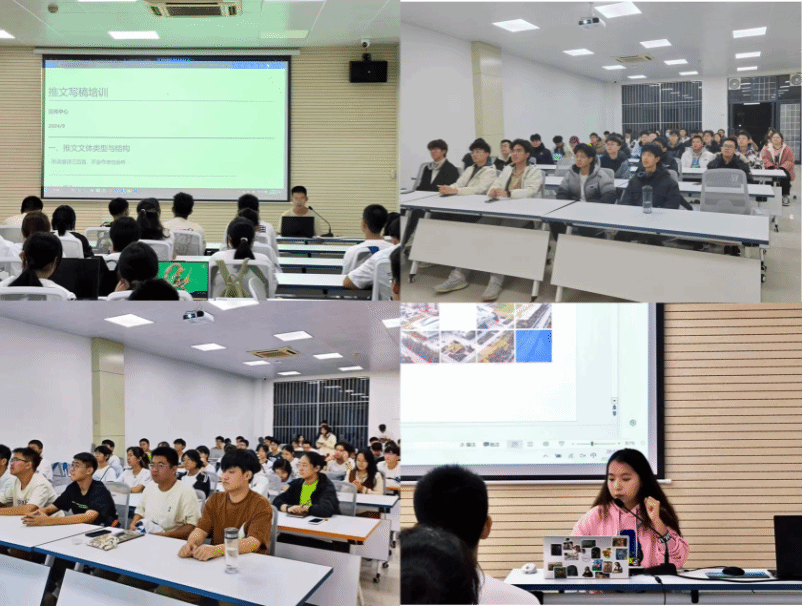
To ensure the high-quality and sustainable development of the Student Union, it holds recruitment lectures for all new students at the beginning of each academic year, attracting students with enthusiasm for service and a sense of responsibility to join the team. After the recruitment, each department carries out internal training and team-building activities in an orderly manner, conducting systematic training on department functions, work processes, activity organization, crisis handling, etc., to help new members adapt to their positions as soon as possible and master work skills. By holding regular plenary sessions and departmental meetings, it clarifies phased goals and task assignments, strengthens the sense of responsibility, and improves work efficiency. All departments cooperate with each other and share resources, polishing organizational capabilities in practice and uniting youthful strength in service, laying a solid foundation for building a high-quality, professional, and service-oriented student organization.
4. Enrich Cultural and Sports Activities and Create a Youthful Vibe
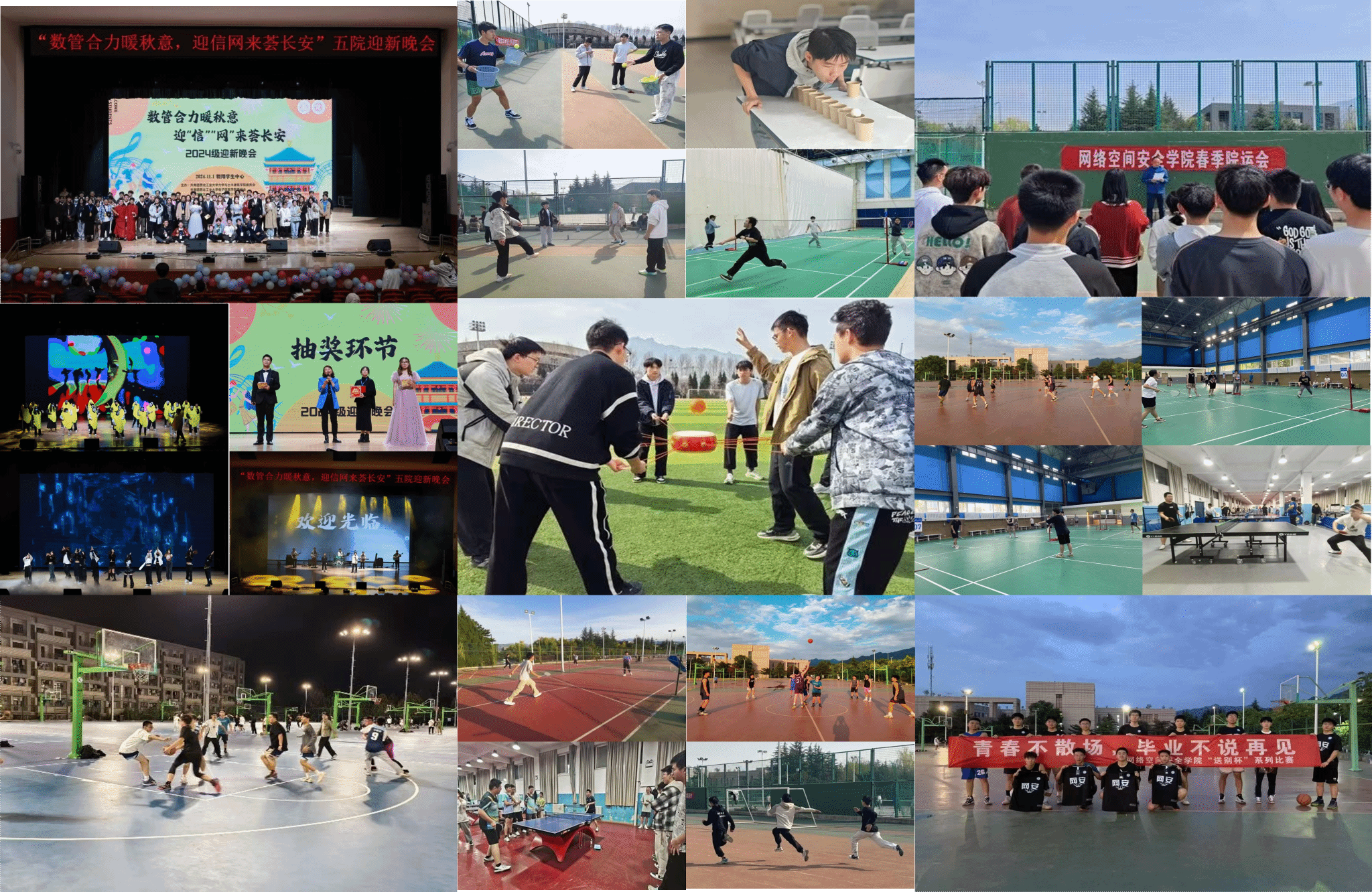
Taking rich cultural and sports activities as the carrier, the Student Union of the School of Cyberspace Security creates a youthful and dynamic campus atmosphere. By holding the "Welcome Cup" series of ball games (including basketball, badminton, table tennis, etc.), it helps new students quickly integrate into the collective and enhance cohesion; the "Farewell Cup" ball game sends a youthful tribute combining competition and warmth to graduates; the Spring Sports Meeting encourages students to participate in physical exercise and show the youthful demeanor of unity and cooperation; it co-hosts the orientation party with multiple colleges, conveying warm wishes through diverse program forms such as singing and dancing, and short plays, and building an inter-college exchange platform. These activities not only enrich extracurricular life but also deepen the friendship between students through competition and interaction, injecting vigorous vitality and humanistic care into the campus.
5. Deepen Practical Education and Serve Social Needs
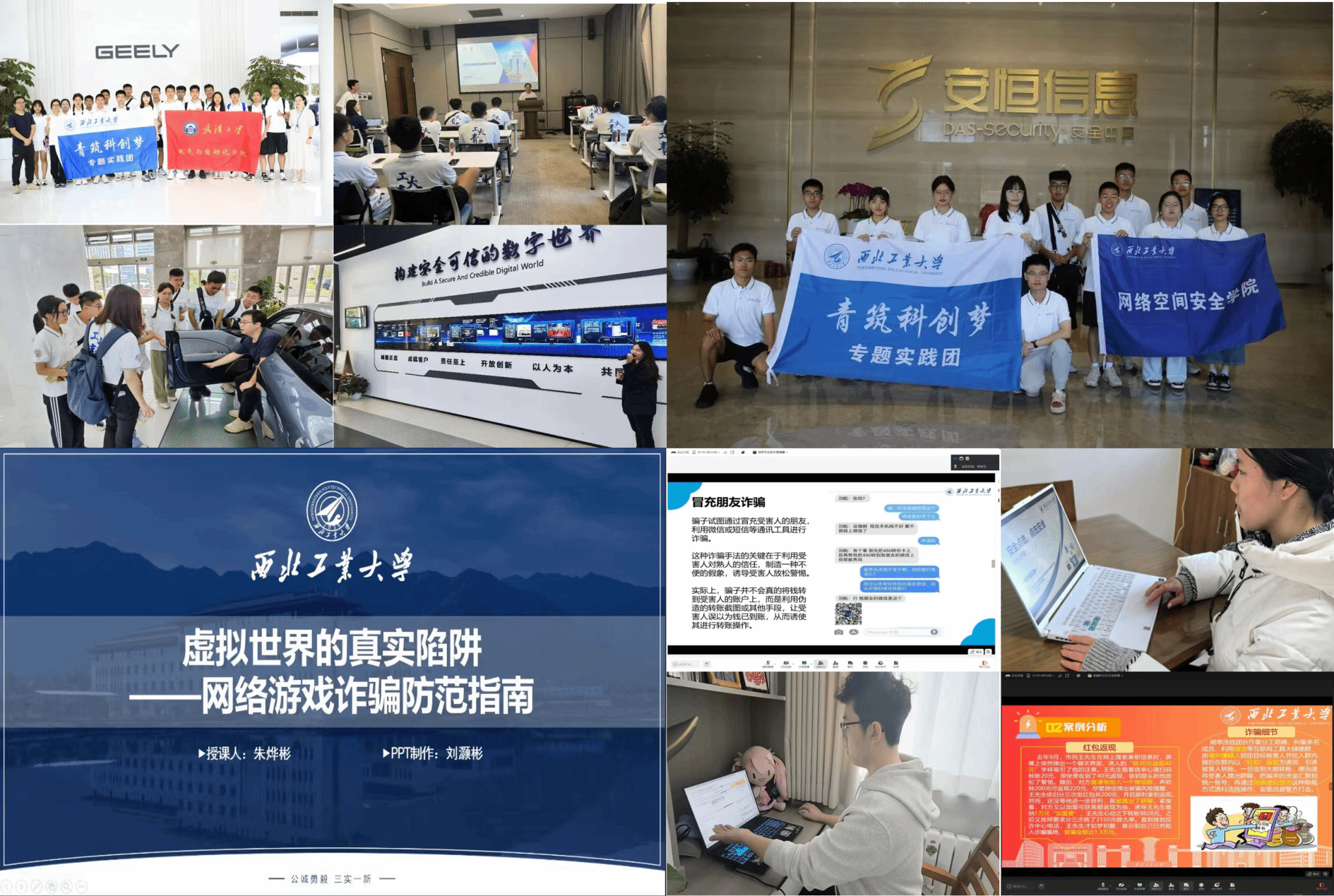
Taking practical activities as the carrier, the School of Cyberspace Security promotes the integration of production and education and social services. By organizing the summer practice of "Visiting Leading Enterprises and Exploring the Future of Information Innovation", it guides students to enter information innovation enterprises, understand the national cyberspace security strategic layout, and enhance professional sense of mission; at the same time, it establishes the Cybersecurity Anti-Fraud Propaganda Team, carrying out targeted lectures for primary and secondary school students, middle-aged and elderly people, and groups in remote areas, covering more than 1,500 person-times and developing 22 special courses, effectively improving the public's cyberspace security awareness. These two practices closely combine professional knowledge with social needs, not only deepening students' professional cognition and sense of responsibility but also injecting youthful momentum into serving the national cyber power strategy.
6. Carry Out Brand Activities and Promote All-Round Development
① Cybersecurity Culture Festival
The Cybersecurity Culture Festival of Northwestern Polytechnical University opens every September. It aims to thoroughly implement General Secretary Xi Jinping's important instructions on cyberspace security, actively respond to the strategic deployment of the National Cybersecurity Publicity Week, and improve the cyberspace security awareness and prevention capabilities of teachers and students. Through various and rich activities such as security short plays, talent shows, knowledge contests, and interactive games, the Culture Festival not only enhances the campus cyberspace security cultural atmosphere but also promotes the practicality and interactivity of cyberspace security education, helping to build a cyberspace security ecosystem with in-depth integration of industry, university, and research. It guides students to shoulder the mission of forging swords for the country and serve the national cyber power strategy.
② "Zhujian Cup" National College Student Cybersecurity Offensive and Defensive Competition
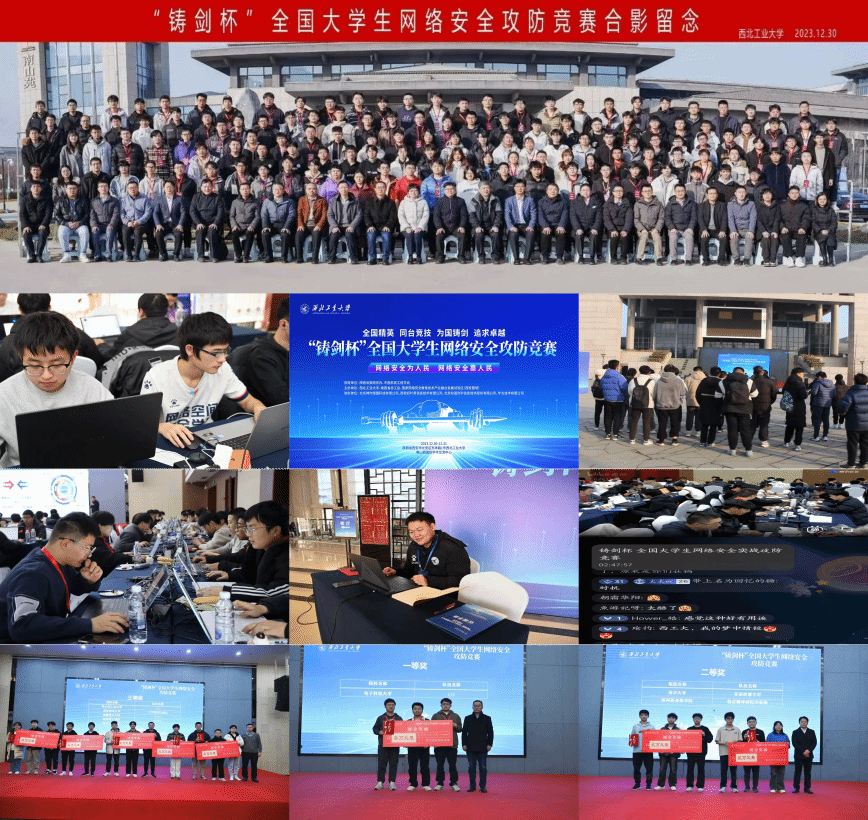
The "Zhujian Cup" National College Student Cybersecurity Offensive and Defensive Competition is held to implement the national cyberspace security strategy, strengthen the training of practical talents, stimulate the patriotic feelings of young students, and serve the construction of a cyber power. Co-sponsored by many units, the competition has attracted nearly 200 students and instructors from 42 teams of 29 universities across the country to participate, competing around three tracks: cyberspace security theory, system vulnerability mining, and public network actual combat attacks. Through real environment simulation and actual combat exercises, the competition has tempered students' cyberspace offensive and defensive skills and adaptability. At the same time, supporting expert reports and live broadcasts have expanded the communication power and influence of cyberspace security education. As an important brand event created by our university, the "Zhujian Cup" has further promoted the collaborative education between universities and enterprises and the in-depth integration of production and education, laying a solid foundation for cultivating "chief engineer-type" cyberspace security talents with systematic thinking, practical capabilities, and a sense of responsibility.
③ Special Activities for the Confidentiality Publicity Month
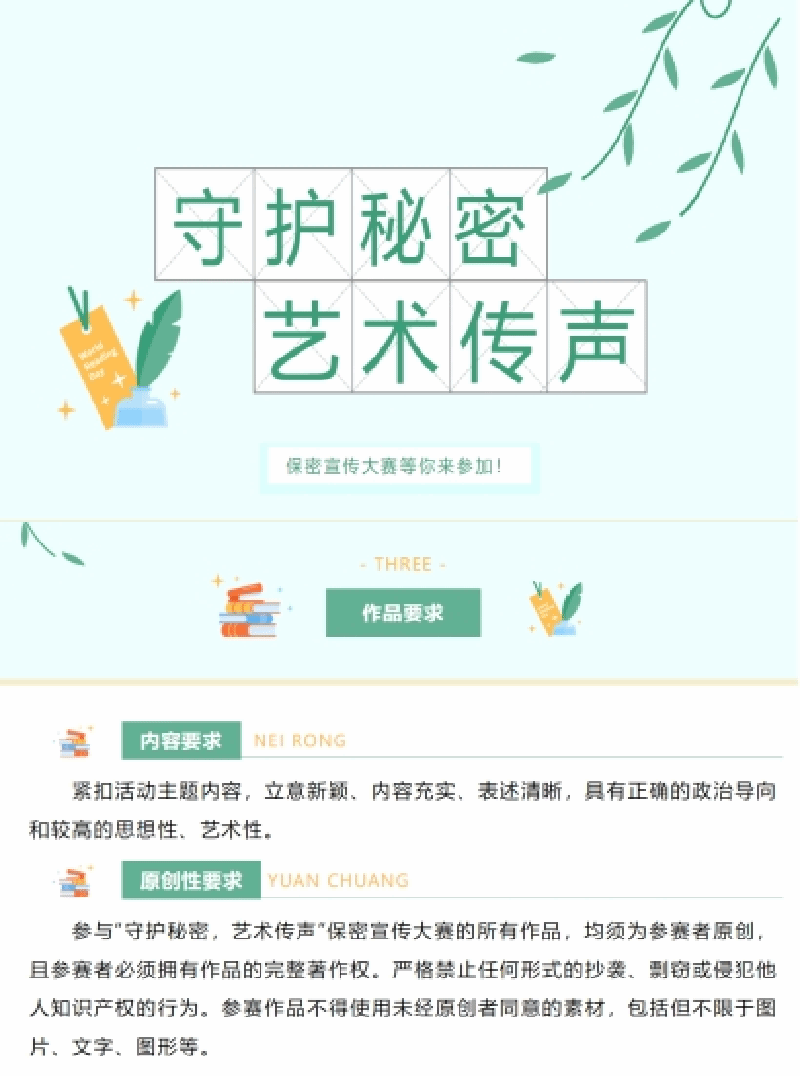
Confidentiality education is an important part of national security education. During the Confidentiality Publicity Month, the Student Union, in conjunction with the university's Confidentiality Office, holds a confidential-themed art creation competition, encouraging students to express their understanding and support for national secret protection through various forms such as painting, photography, and short videos. This creative activity not only provides a platform for students to show their talents but also serves as a vivid national security practice course, effectively enhancing the awareness of confidentiality, responsibility, and national security.
④ Thematic Garden Party for "The 10th Anniversary of Comprehensive National Security Education Going Deep and Solid"
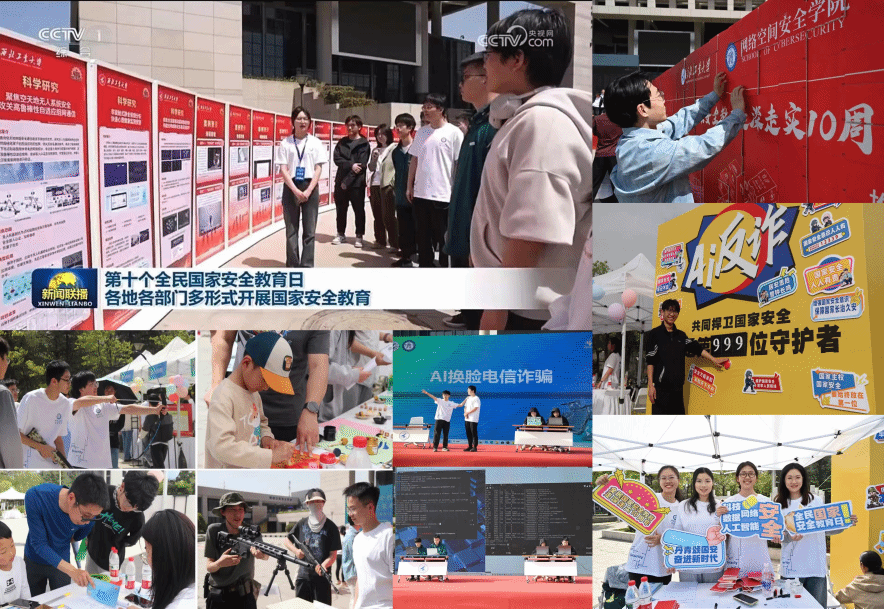
On the occasion of the April 15 National Security Education Day, the college carefully organized a unique garden party with the theme of "The 10th Anniversary of Comprehensive National Security Education Going Deep and Solid". The event aims to popularize national security knowledge to teachers and students in a relaxed and interesting way and improve their security awareness. At the opening ceremony, students presented cyberspace security scenarios such as AI face-swapping and phishing emails through role-playing, combined with magic and art performances, vividly showing cyberspace security threats and defense technologies. The garden party adopted a "stamp collection and check-in" model to connect six characteristic projects, such as "National Security Knowledge Popularization" where invited police officers explained cases, "Cybersecurity Sniper Battle" full of fun and challenges, and "Cultural Security Rubbing Experience" inheriting culture, allowing participants to learn national security knowledge in an all-round and immersive way. In addition, the on-site thematic exhibition, the 1,000-person puzzle activity, and the professional explanations of the publicity team of the School of Cyberspace Security complement each other, further deepening the educational effect and enabling students to have a deeper understanding of national security knowledge. It is worth mentioning that CCTV's "News Network" and "Oriental Time and Space" reported on this activity, further expanding its influence, making more people feel the importance of comprehensive national security education, and promoting the concept of national security to take root in people's hearts.
The Student Union of the School of Cyberspace Security is a stage for youthful passion and a practice field for responsibility and innovation. We unite classmates with a service-oriented attitude and build bridges of communication through practical actions. Whether it is planning diverse cultural activities, enhancing teachers' and students' cyberspace security awareness, listening to students' needs, optimizing campus services, or exploring the sense of responsibility in the digital age through collaboration. Here, every enthusiasm will be transformed into the power of change, and every creativity can become a star that lights up the campus. We look forward to moving forward hand in hand with you, tempering our character in service, broadening our horizons in communication, guarding the beauty of the campus with youthful strength, and jointly writing our passionate chapter!
Appendix 1: Contact Information of the 6th Presidium of the Student Union of the School of Cyberspace Security

