On June 28, the 2025 Northwest Regional Academic Symposium on "Information Network Security" was held at Gansu University of Political Science and Law in Lanzhou. The conference was hosted by the Information Network Security journal of the Third Research Institute of the Ministry of Public Security, and co-organized by Gansu University of Political Science and Law, the School of Cyberspace Security at Northwestern Polytechnical University (NPU), and the School of Information Science and Engineering at Lanzhou University. The event facilitated in-depth exchanges on cutting-edge topics including cybersecurity discipline construction, cultivation of practical talents, new directions in cybersecurity, new technologies and applications in cybersecurity, large model security, and confidential computing. The focus was on the implementation and integration of frontier technologies, jointly contributing to the construction of Digital China.
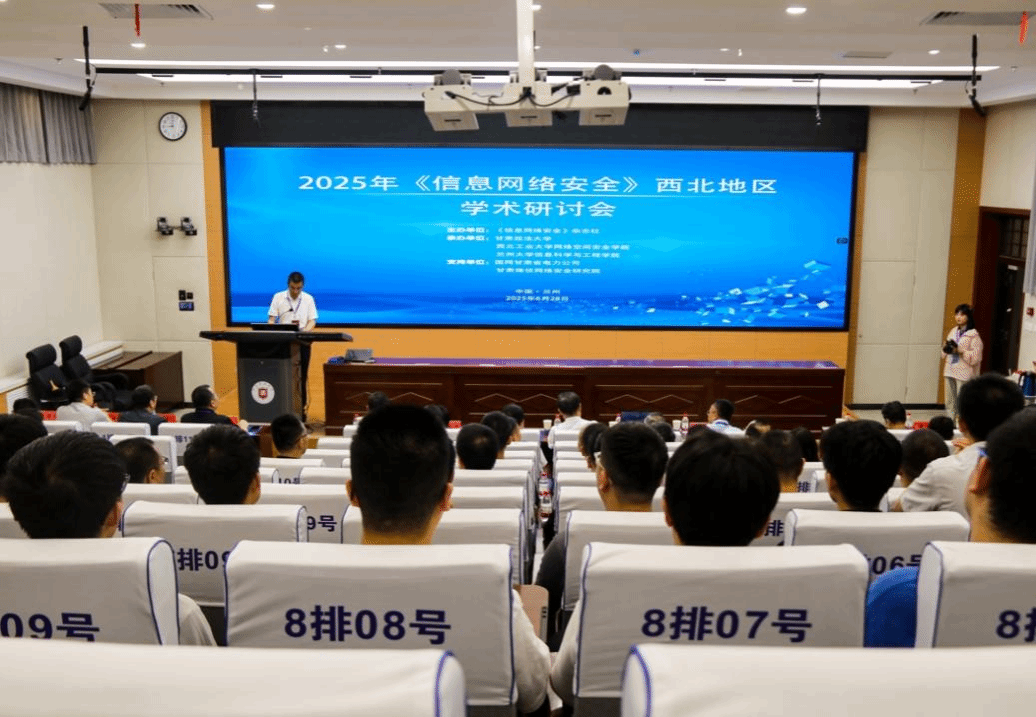
(Image placeholder: 2025 Northwest Regional Academic Symposium on "Information Network Security")
Professor Shi Yucheng, Standing Committee Member of the Party Committee and Vice President of Gansu University of Political Science and Law, delivered a welcome speech, expressing a warm welcome and sincere thanks to the attending leaders and experts. He pointed out that cybersecurity is not only related to national security and social stability but also profoundly affects high-quality economic development and cultural prosperity. As one of the first national institutions for cultivating outstanding legal talent and a member of the "National Law University Alliance," the university hopes to collaborate with experts to explore innovative paths for cyberspace security governance in the Northwest region, inject new vitality into the development of information network security and disciplinary construction in the Northwest, and jointly build a secure and trustworthy cyberspace environment.
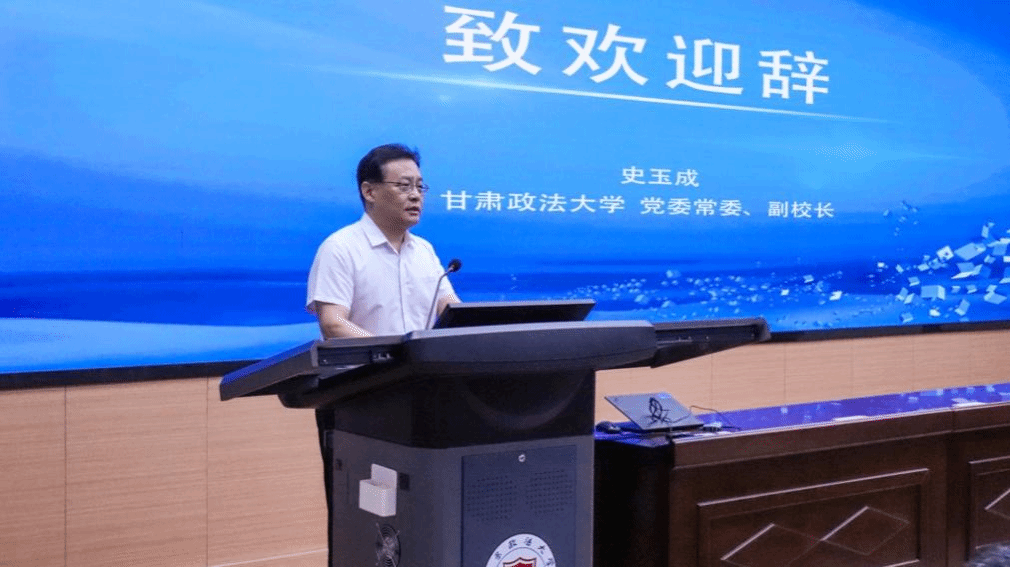
(Image placeholder: Delivering Welcome Speech)
Zhang Wentao, Party Committee Secretary of the School of Cyberspace Security at Northwestern Polytechnical University, on behalf of the co-organizing units, extended heartfelt gratitude to the leaders at all levels for their support and to all the experts for their attendance. He noted that this symposium brought together numerous experts in the cybersecurity field to engage in in-depth discussions on frontier technologies, hot issues, and development trends in cyberspace security. He expressed hope that the symposium would promote the sharing of academic ideas and research achievements, consolidate cybersecurity forces in the Northwest region, jointly address cyberspace security challenges under the new circumstances, and contribute wisdom and strength to the high-quality development of China's cyberspace security endeavors.
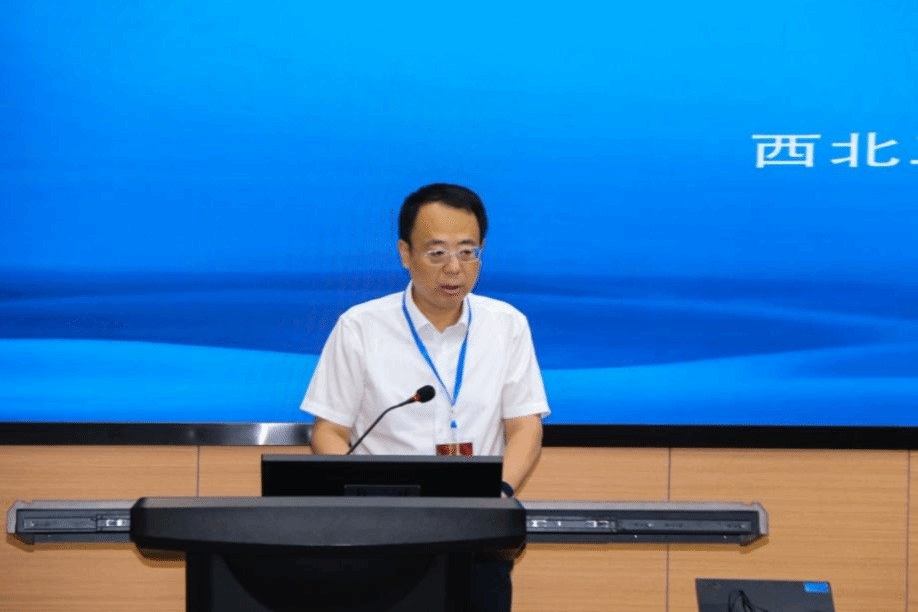
(Image placeholder: Zhang Wentao, Party Committee Secretary of the School of Cyberspace Security, NPU)
Duan Xiaoping, Deputy Party Secretary (at the department-head level) of the School of Information Science and Engineering at Lanzhou University, introduced the university's development philosophy and disciplinary construction approach, emphasizing its important role in serving national strategies. He stated that the Western region faces new development opportunities and challenges, and that cybersecurity is not only a competition of technology but also of talent and concepts. He looked forward to building a high-level exchange platform through this symposium, working together to create a new pattern of coordinated development integrating industry, academia, research, and application, and jointly promoting the development of the cybersecurity industry in the Northwest region. Finally, he wished the guests fruitful academic gains in Lanzhou, the capital on the Yellow River, and expressed sincere thanks to all the leaders and experts for their guidance.
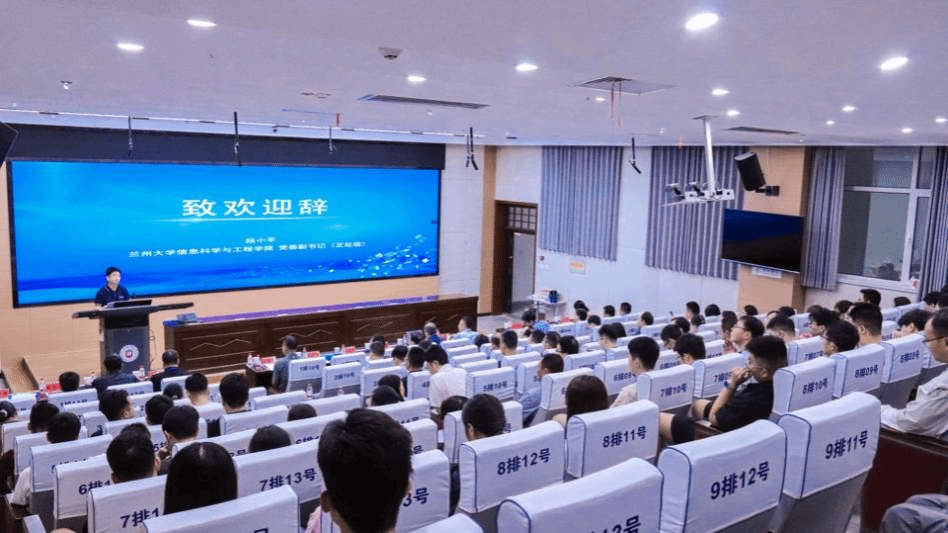
(Image placeholder: Duan Xiaoping, Deputy Party Secretary (at the department-head level) of the School of Information Science and Engineering, Lanzhou University)
Professor Li Hui, Executive Dean of the School of Cyberspace Security at Xidian University, pointed out that data circulation and utilization have become an important national development strategy, urgently requiring privacy computing to achieve personal information protection during the process. He elaborated in detail on research progress in areas such as privacy information identification, extended privacy information control, privacy information disclosure protection, and evidence preservation and forensics during data circulation, providing technical support for the circulation and utilization of data elements.

(Image placeholder: Professor Li Hui, Executive Dean of the School of Cyberspace Security, Xidian University)
Regarding the construction of the cyberspace security discipline and talent cultivation, Professor Hu Wei from the School of Cyberspace Security at NPU introduced the university's efforts to carry out distinctive cyberspace security discipline construction based on national strategic needs. In talent cultivation practice, the school has developed the educational philosophy of "Talent Security + Security Talent" and the training principle of "Solid Foundation, Strong System, Emphasis on Practice, and Expanding Interdisciplinarity," highlighting the university's educational philosophy of "Forging the Sword for the Country" and the culture of "Cultivating Chief Engineer-type Talents," providing solid talent support and technical guarantees for serving the national security strategy.
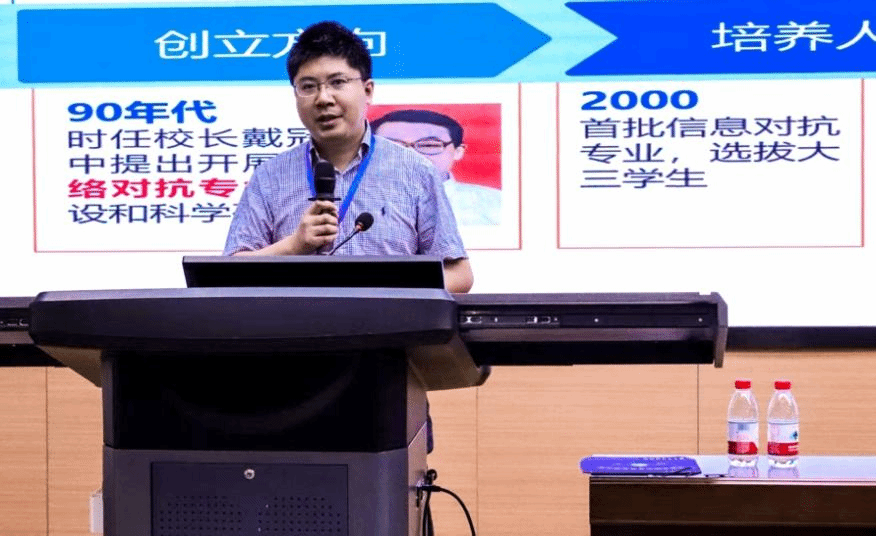
(Image placeholder: Professor Hu Wei, School of Cyberspace Security, Northwestern Polytechnical University)
Currently, the new round of information revolution represented by quantum computing, artificial intelligence, and 6G communication is making breakthroughs and converging at multiple points, posing new challenges and demands for the security foundations, security models, design concepts, and application paradigms of cryptography, which is undergoing a new transformation. Lu Hanghui, Director of the Cryptography Theory and Technology Research Office at the Institute of Information Engineering, Chinese Academy of Sciences, explored new directions for cryptography development, including anti-quantum cryptography, fully homomorphic encryption, AI cryptography, and 6G communication cryptography.
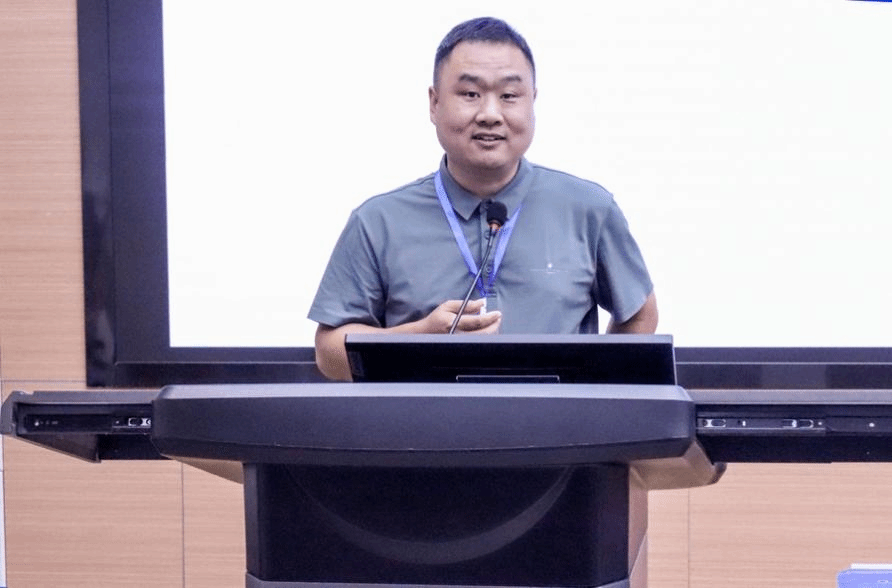
(Image placeholder: Lu Hanghui, Director of Cryptography Theory and Technology Research Office, Institute of Information Engineering, Chinese Academy of Sciences)
Sub-forum 1: New Cybersecurity Technologies and Applications
At the sub-forum on new cybersecurity technologies and applications, Associate Professor Yuan Xiaogang from the School of Cyberspace Security at Gansu University of Political Science and Law introduced a talent cultivation project aimed at developing cybersecurity professionals with professional legal literacy, solid theoretical foundations, and outstanding practical abilities for multi-ethnic regions. The project is centered on "Practice-Oriented, Northwest-Focused" and leverages the disciplinary advantages of law and public security to meet strategic national demands. Addressing new security challenges in the AI era, Professor Qin Baodong, Vice Dean of the School of Cyberspace Security at Xi'an University of Posts and Telecommunications, shared achievements in the field, focusing on key technologies of security comparison protocols. To address challenges in public opinion evolution and abnormal behavior identification, Professor Jin Long from the School of Information Science and Engineering at Lanzhou University, based on computational sociology theory, constructed a series of foundational models based on the Matthew Effect, providing theoretical support for building intelligent, defensible public opinion analysis systems. Yan Xianguo, Deputy General Manager of the Digitalization Department of State Grid Gansu Electric Power Company, shared insights on scientifically constructing a comprehensive "Management, Technical Defense, Human Defense, Joint Defense" four-in-one cybersecurity defense system, with the core of ensuring grid security and reliable power supply and the goal of supporting the secure construction of new power systems. The large model security roundtable discussion was moderated by Professor Jin Long from Lanzhou University. Professors Zhou Junwei from Wuhan University of Technology, Wang Hao from Xidian University, Associate Professor Feng Jing and Lin Deyu from Xi'an University of Posts and Telecommunications, and Dr. Liu Wenchao from the Engineering University of PAP engaged in in-depth discussions on key issues such as data leakage risks, privacy protection challenges, large model hallucinations, and their security detection. The discussion aimed to establish new security defense mechanisms and technical standards, build a scientific and comprehensive evaluation system, and enhance the security protection capabilities of large models.
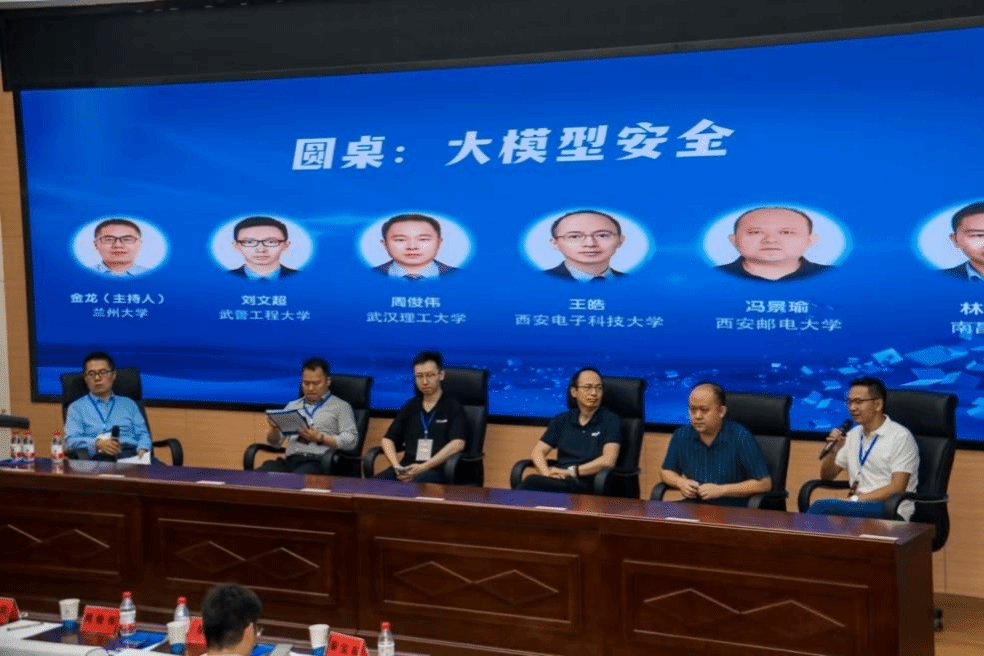
(Chart placeholder: Large Model Security)
(Image placeholder: Big Data Security Roundtable Discussion)
Sub-forum 2: Confidential Computing
At the confidential computing sub-forum, Professor Zhao Qinglin, Vice Dean of the School of Information Science and Engineering at Lanzhou University, delivered a welcome speech. He emphasized that with the rapid development of the digital economy and the deepening implementation of national strategies, data security and privacy protection have become key issues. Confidential computing technology, as an important means to ensure data security, is undergoing a critical transition period from theoretical innovation to industrial application.
Focusing on the construction of a confidential computing evaluation system, Jin Long, Chief Scientist of Trusted Computing at Huawei, outlined the progress in international standards and related evaluation criteria for confidential computing, emphasizing the urgency of enhancing international competitiveness and the importance of promoting the implementation of confidential computing evaluation standards. Li Yu, Senior Engineer at the Institute of Software, Chinese Academy of Sciences, discussed how multiple trusted roots in confidential computing platforms collaboratively ensure overall security and reliability, proposing a confidential computing platform elastic collaborative trust service that integrates active protection from the RISC-V community and passive monitoring from TPM. Researcher Zhang Fengwei from Southern University of Science and Technology introduced the laboratory's research work on constructing GPU Trusted Execution Environments (TEE), including the first Arm GPU TEE StrongBox@CCS2022 and the Arm Confidential Computing Architecture Extension CAGE@NDSS2024, as well as attack research on GPU TEE MDLE@CCS2025. This work first revealed and implemented a method to break GPU isolation through efficient GPU MCU firmware, and validated the feasibility of the attack on various real-world devices and typical application scenarios. Focusing on the construction and optimization of confidential computing system software, the Key Laboratory of Cryptography and Network Security at Nankai University elaborated on the performance optimization and security guarantee mechanisms of key components in confidential computing environments, providing an efficient, secure, and reliable system software foundation for confidential computing. Addressing the high-throughput intelligent computing demands represented by AI large models and massive big data analysis, Zhang Lei, Chief Senior Expert at Nanhu Laboratory, provided an in-depth analysis of algorithmic framework systems represented by heterogeneous clustering, and their enthusiastic applications in government affairs, finance, healthcare, artificial intelligence, and other fields. Focusing on tackling security challenges on RISC-V platforms, the National Cybersecurity School of Wuhan University introduced innovative research results in two areas: firmware trusted root design and a practical confidential virtual machine architecture for commercial RISC-V processors.
The main forum of the conference was chaired by the Deputy Party Secretary and Secretary-General of the School of Cyberspace Security at Gansu University of Political Science and Law. The conference featured two sub-forums: New Cybersecurity Technologies and Applications, and Confidential Computing. The sub-forums were chaired by Associate Dean Wu Han of the School of Cyberspace Security at Gansu University of Political Science and Law and Associate Professor Wang Kun of the School of Information Science and Engineering at Lanzhou University, respectively. Over 50 cybersecurity experts and scholars from domestic universities, research institutes, and enterprises, including Northwestern Polytechnical University, Lanzhou University, Chongqing University, Beijing Institute of Technology, Xidian University, Xi'an University of Posts and Telecommunications, Shihezi University, Xinjiang University, the Institute of Information Engineering of the Chinese Academy of Sciences, Huawei, and Nanhu Laboratory, participated in this academic symposium. The conference was supported by State Grid Gansu Electric Power Company and Gansu Fenghuo Cybersecurity Research Institute.

